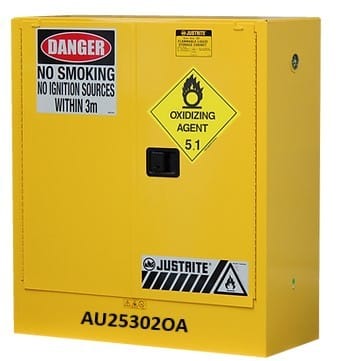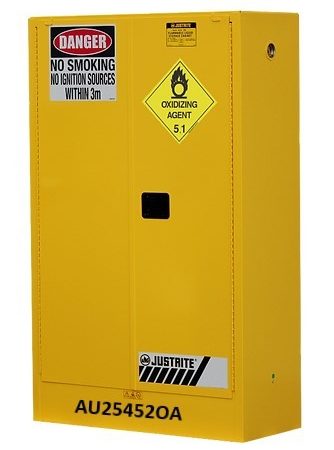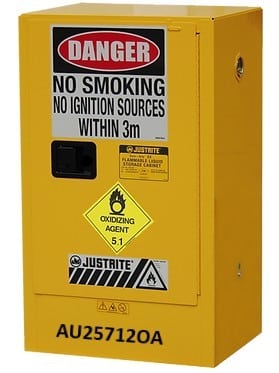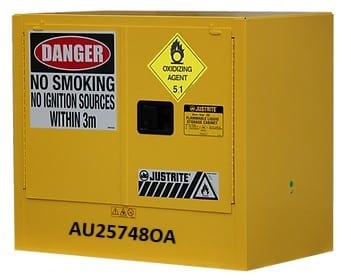


Justrite dangerous goods storage cabinets are held by Australian Scientific in 51 models, from a $1,061 15 L corrosive cabinet up to an $8,125 250 L polyethylene cabinet with centre wall. The range is organised by hazard class rather than by size, because each class is covered by its own Australian Standard: flammable and combustible liquids under AS1940-2017, corrosive substances under AS3780, and toxic substances and pesticides under AS4452. Capacities run from 15 L to 350 L.
The Justrite range
Flammable liquid cabinets
Fourteen models from 30 L to 350 L, $1,392 to $4,192, built to AS1940-2017. Construction is double-walled steel with a 40 mm thermal air gap, powder-coated in high-visibility yellow with hazard signage. The 160 L, 250 L and 350 L cabinets are also available in weatherproof versions for outdoor placement, and a 205 L model is configured for waste flammable liquids.
Corrosive substance cabinets
Seventeen models from 15 L to 350 L, $1,061 to $8,125, manufactured to comply with AS3780. Two constructions are stocked: powder-coated steel with a polyethylene tray on each shelf, and full polyethylene for the most aggressive vapours. A 100 L under bench model fits beneath standard laboratory benching.
Centre wall cabinets
The 100 L, 150 L, 200 L and 250 L polyethylene corrosive cabinets are available with a centre wall dividing the interior, which allows incompatible substances within the same hazard class to be separated in one unit. These run $4,197 to $8,125.
Toxic substance and pesticide cabinets
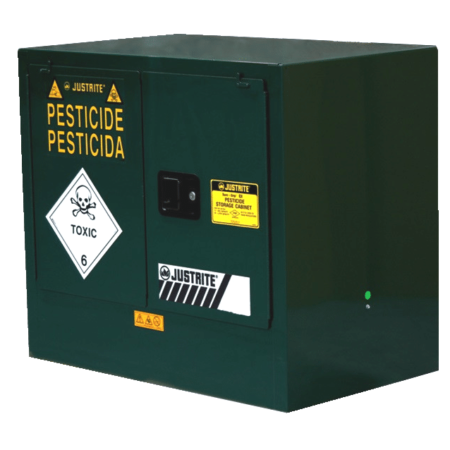
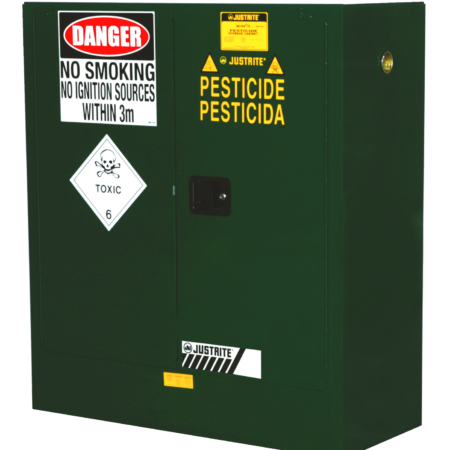
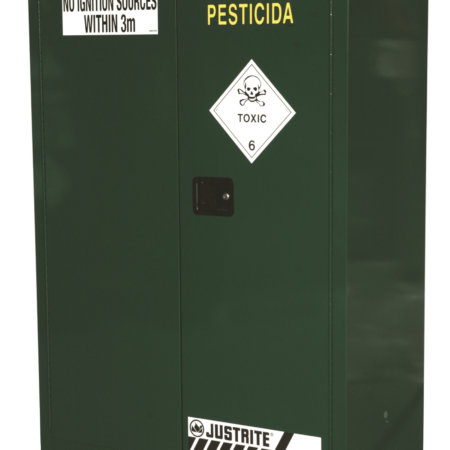
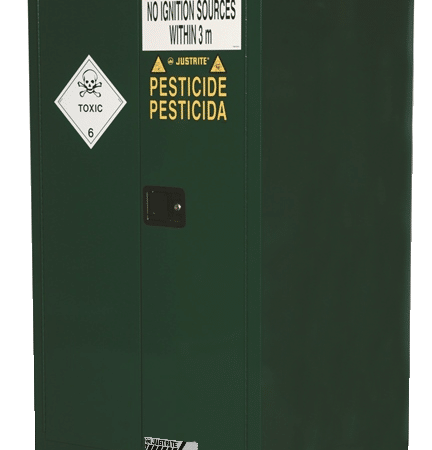
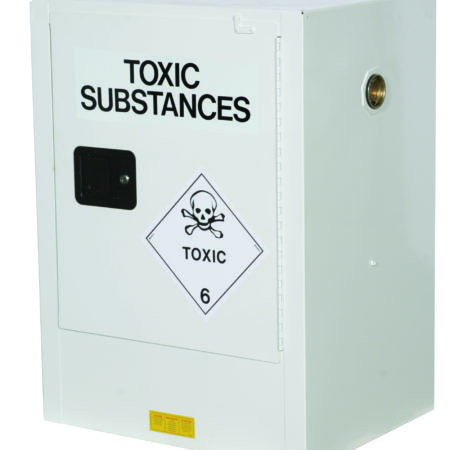
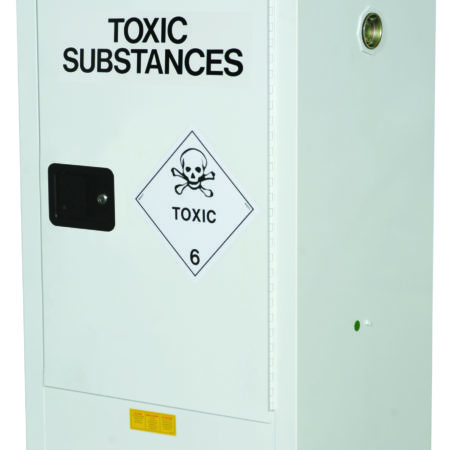
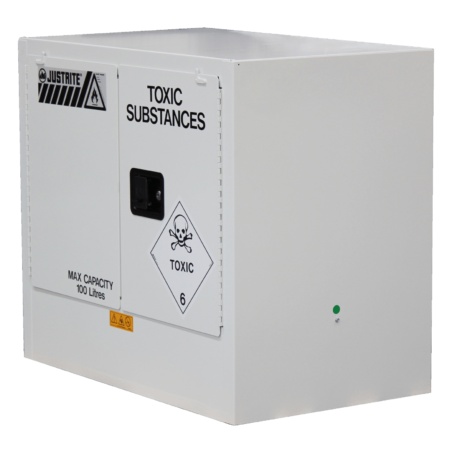
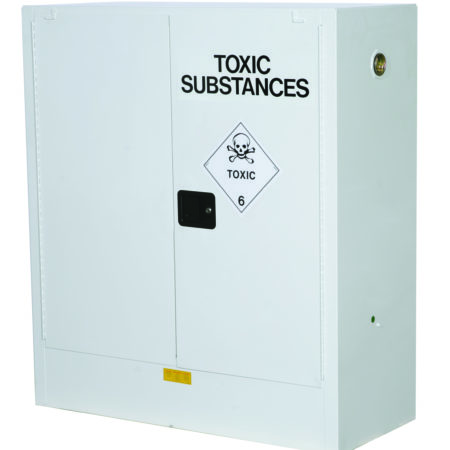
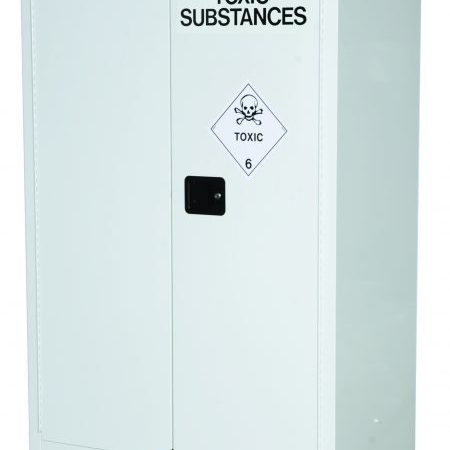
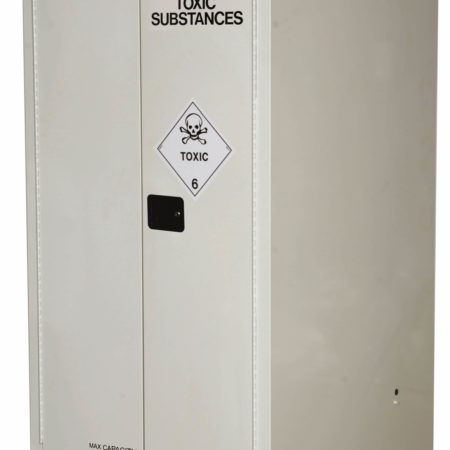
Six toxic substance (poison) cabinets from 30 L to 350 L at $1,494 to $3,039, and four pesticide cabinets from 100 L to 350 L at $2,008 to $3,172. Both are built to AS4452 for the storage of toxic substances.
Oxidising agent and organic peroxide cabinets
Four oxidising agent cabinets and four organic peroxide cabinets, $1,496 to $2,510, sharing the same four footprints used across the rest of the range.
Shelving
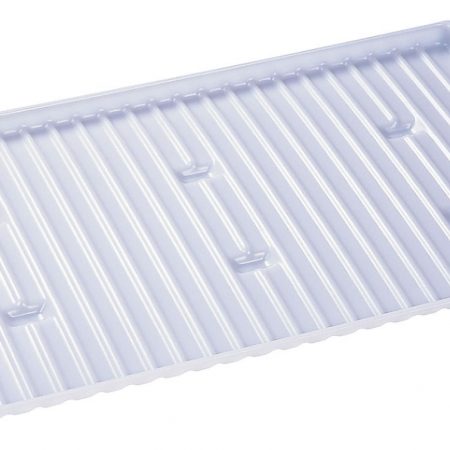
Additional and replacement shelves are stocked separately: metal shelves at $84 and polyethylene shelves at $155. Cabinets are supplied with shelves, so check the product page for the number included before adding more.
Choosing a cabinet capacity
Most of the range is built on a small number of shared footprints, so a site standardising on one cabinet size can usually match that size across hazard classes. The 60 L and 100 L cabinets suit a single laboratory or workshop bay. The 160 L and 250 L sizes are the usual choice for a store room holding several decanted containers or drums. The 350 L cabinets are the largest indoor units stocked. All cabinets use a three-point locking system with a fail-safe closing mechanism and sequential self-closing doors.
Frequently asked questions
What is a flammable liquids cabinet used for?
A flammable liquids cabinet stores Class 3 flammable and combustible liquids in a fire-resisting enclosure. The Justrite flammable cabinets are built to AS1940-2017, with double-walled steel construction and a 40 mm thermal air gap, powder-coated in high-visibility yellow with hazard signage.
Which Australian Standard applies to the cabinet I need?
It depends on the hazard class being stored. Flammable and combustible liquids are covered by AS1940-2017, corrosive substances by AS3780, and toxic substances and pesticides by AS4452. The standard a given cabinet is built to is stated on its product page.
What size cabinet do I need?
Capacities in this range run from 15 L to 350 L. The 60 L and 100 L cabinets suit a single laboratory or workshop bay, while 160 L and 250 L are the usual choice for a store room. Because several hazard classes share the same footprints, a site standardising on one size can usually match it across classes.
Can flammable and corrosive chemicals share a cabinet?
No. Each hazard class has its own Australian Standard and its own cabinet, which is why this range is organised by class rather than by size. Where incompatible substances within the corrosive class need separating, the 100 L, 150 L, 200 L and 250 L polyethylene cabinets are available with a centre wall dividing the interior.
What is the difference between the powder-coated and polyethylene corrosive cabinets?
Powder-coated steel cabinets use a polyethylene tray on each shelf to catch spills, and run from $1,061 to $3,188. Full polyethylene cabinets suit the most aggressive vapours, and run from $2,428 to $8,125. Both are manufactured to comply with AS3780.
Are weatherproof cabinets available for outdoor storage?
Yes. The 160 L, 250 L and 350 L flammable liquid cabinets are each available in a weatherproof version, at $2,647, $3,040 and $3,521 respectively.