Results for {phrase} ({results_count} of {results_count_total})
Displaying {results_count} results of {results_count_total}

 Turbidity is a measure of the clarity of water, expressed in Nephelometric Turbidity Units (NTU). It is caused by suspended particles that scatter light passing through a water sample, and is one of the primary indicators of water quality in drinking water treatment, environmental monitoring, aquaculture, industrial process control, and wastewater management.
Australian Scientific supplies portable turbidity meters from HORIBA and Apera Instruments, covering both ISO 7027 (infrared LED) and USEPA 180.1 (tungsten lamp) compliance standards. All models are supplied as complete kits with carry case and calibration solutions. Select the compliance standard your application requires — ISO 7027 for Australian Drinking Water Guidelines (ADWG) and general environmental monitoring, or USEPA 180.1 for US EPA-method reporting obligations.
Australian Scientific is the authorised Australian agent for HORIBA water quality instruments, providing local sales and support for the full turbidity meter range. Contact us for technical advice on selecting the right model for your application.
| Model | Compliance standard | Light source | NTU range | Data logging | TruRead mode | Price (ex GST) |
|---|---|---|---|---|---|---|
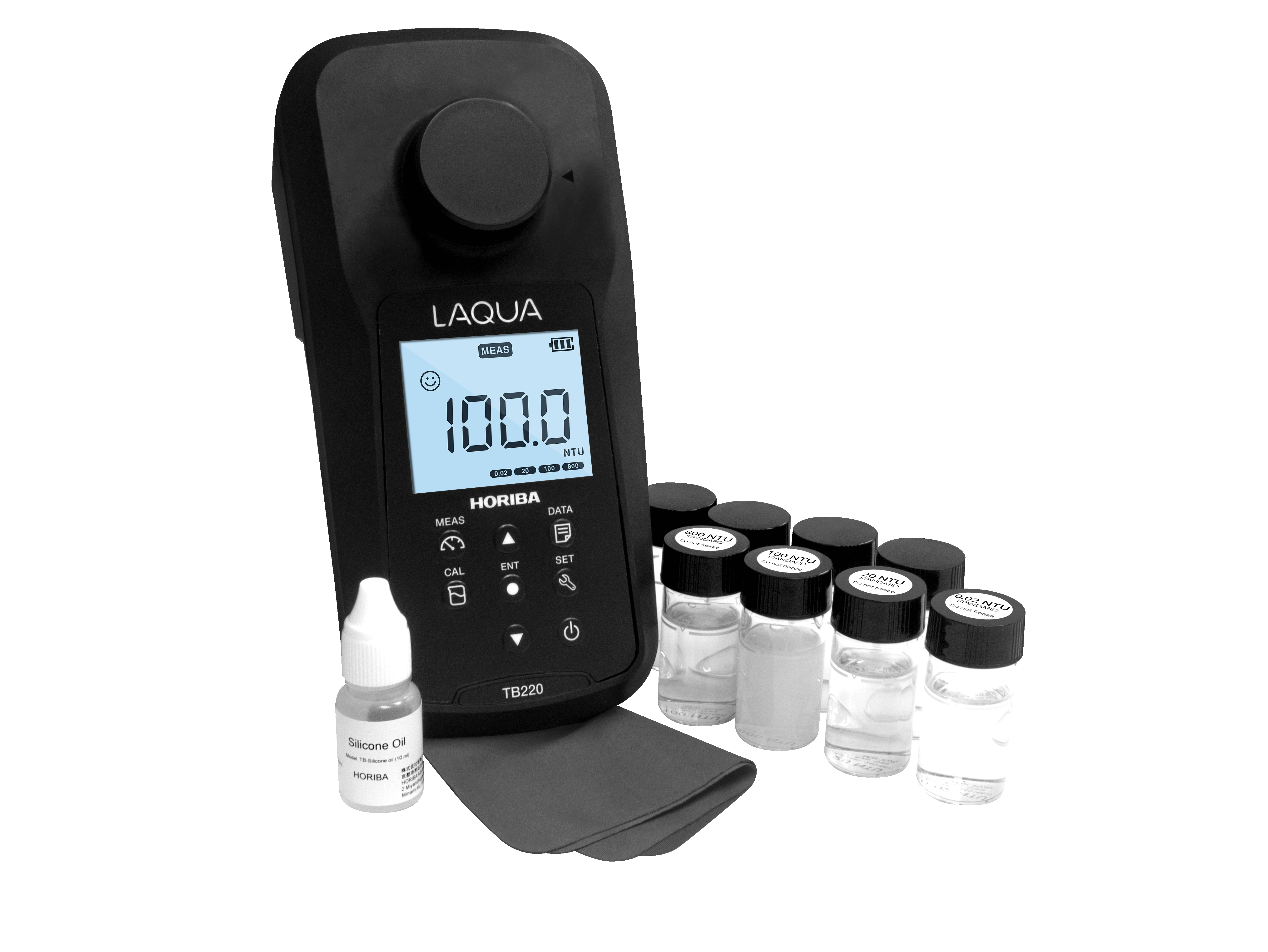
| HORIBA TB220-K | ISO 7027, DIN EN 27027 | Infrared LED (860 nm) | 0.00–2000 NTU | 2,000 data points with date/time stamp | — | $1,695.00 |
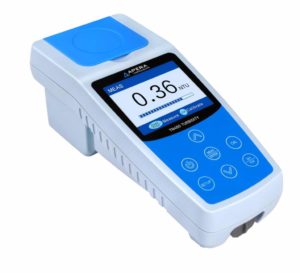
| Apera TN400 | ISO 7027 | Infrared LED | 0–1000 NTU | N/A | — | $1,410.00 |
| Apera TN480 | ISO 7027 | Infrared LED | 0–1000 NTU | 200 data sets with date and time | ✓ | $1,970.00 |
| Apera TN500 | USEPA 180.1 | Tungsten filament lamp | 0–1000 NTU | 200 data sets with date and time | ✓ | $2,085.00 |
ISO 7027 & DIN EN 27027 — Auto-range to 2000 NTU, self-diagnostic calibration, IP67
ISO 7027 — 0–1000 NTU, large TFT colour display, ±1% or 0.02 NTU accuracy
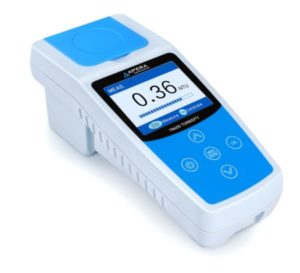
USEPA 180.1 — 0–4000 NTU, tungsten lamp, GLP data logging, TruRead measurement mode
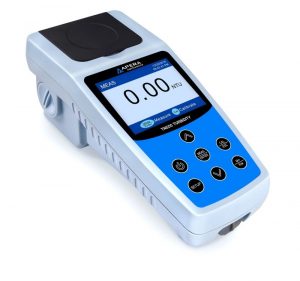
ISO 7027 — Infrared LED light source
ISO 7027 is the standard referenced in the Australian Drinking Water Guidelines (ADWG) and is the default compliance requirement for most drinking water, environmental, and industrial turbidity measurement in Australia. The infrared LED light source (860 nm) measures scattered light using a 90° nephelometric method, and is less susceptible to interference from coloured samples. The HORIBA TB220-K, Apera TN400, and Apera TN480 all meet ISO 7027.
Recommended for: ADWG compliance, environmental field surveys, river and groundwater monitoring, drinking water treatment, aquaculture, industrial process water, wastewater.
USEPA 180.1 — Tungsten filament lamp
USEPA Method 180.1 uses a tungsten filament lamp and is mandated for US EPA regulatory reporting on drinking water, groundwater, surface water, saline water, and wastewater. In Australia, USEPA 180.1 is required where projects involve reporting to US federal agencies or reference US EPA drinking water methodology. The Apera TN500 is the only model in this range that meets USEPA 180.1.
Recommended for: US EPA-method reporting, projects with international regulatory requirements, organisations with US EPA-aligned quality systems.
Drinking Water Treatment
Turbidity is one of the most critical parameters in drinking water treatment. Australian Drinking Water Guidelines (ADWG 2022) specify turbidity limits for treated water to ensure filtration effectiveness and reduce microbial risk. Portable turbidity meters allow operators to verify treatment performance at the point of measurement, without returning samples to a fixed laboratory.
Environmental Monitoring and Field Surveys
River, lake, and groundwater monitoring programmes routinely measure turbidity as an indicator of erosion, sediment run-off, and anthropogenic disturbance. Portable meters with data logging — such as the HORIBA TB220-K, Apera TN480, and TN500 — are suited to multi-site field campaigns requiring traceable, time-stamped records.
Aquaculture and Fish Hatcheries
Water clarity is a critical health parameter in aquaculture systems. Elevated turbidity can reduce dissolved oxygen levels, interfere with feeding behaviour, and increase stress responses in fish and crustaceans. Regular turbidity monitoring helps operators identify filtration issues before they affect stock health.
Industrial Process Water and Quality Control
Industries including food and beverage, pharmaceutical manufacturing, and chemical processing rely on turbidity measurement as part of process control systems. Portable bench-quality accuracy in a field meter supports in-process monitoring without laboratory bottlenecks. For a broader assessment including pH, conductivity, and dissolved oxygen alongside turbidity, see the HORIBA U-50 Series.
Wastewater Compliance Testing
Wastewater treatment plants measure turbidity to assess effluent quality prior to discharge. Both ISO 7027 and USEPA 180.1 compliant meters are used in this sector depending on the regulatory framework applicable to the facility. Contact Australian Scientific if you need help confirming the compliance standard required for your application.
All turbidity meters require periodic calibration against traceable standards. AMCO high-molecular polymer turbidity calibration standards — available in 20, 100, 400, and 800 NTU concentrations — are EPA-approved, non-toxic, NIST-traceable, and carry a guaranteed one-year shelf life. Replacement calibration standards are available separately.
For applications requiring turbidity alongside other water quality parameters — including pH, dissolved oxygen, conductivity, salinity, TDS, ORP, and depth — the HORIBA U-50 Series multi-parameter meters incorporate turbidity measurement in a single portable instrument with up to 11 simultaneous parameters and GPS-enabled logging.
Also available from Australian Scientific: