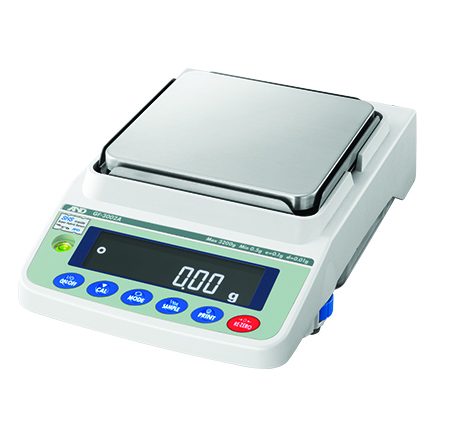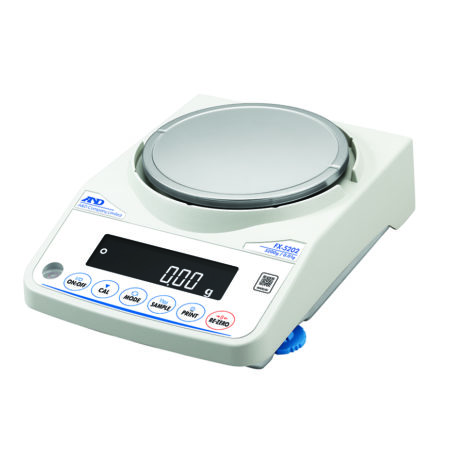

Australian Scientific is an Australian supplier of A&D Weighing balances and scales, with 94 A&D instruments in stock. They run from a $155 compact bench scale up to a $10,633 semi-micro premium balance. A&D covers the full weighing range in one brand: semi-micro analytical work at 0.01 mg readability, laboratory precision balances, washdown-rated field models, and trade-approved bench and platform scales for retail and dispatch.
The A&D range
Precision and analytical balances
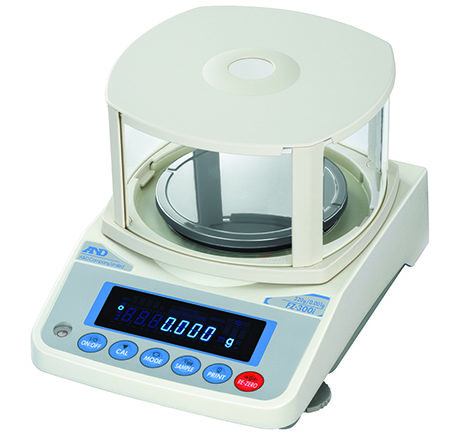
The GX-A Series spans 220 g × 0.001 g through to 6,200 g × 0.1 g, covering most routine laboratory weighing. For analytical and semi-micro work, the BH-T Series reaches 220 g × 0.01 mg and 320 g × 0.1 mg.
Compact and portable balances
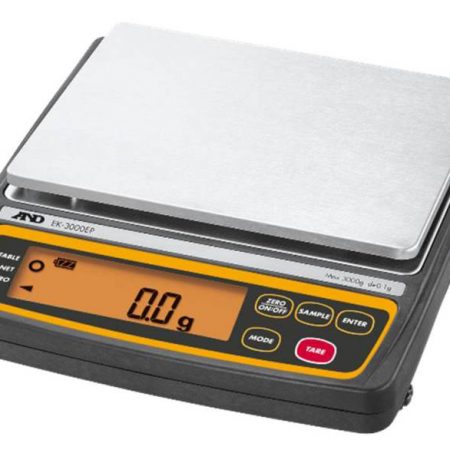
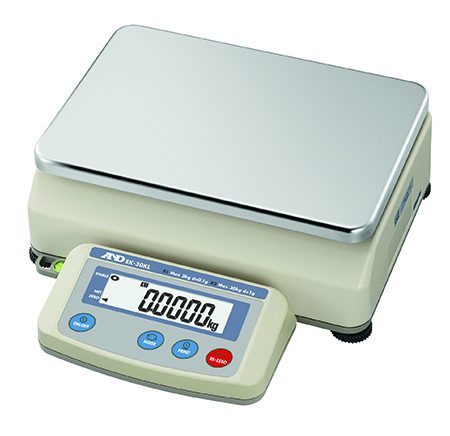
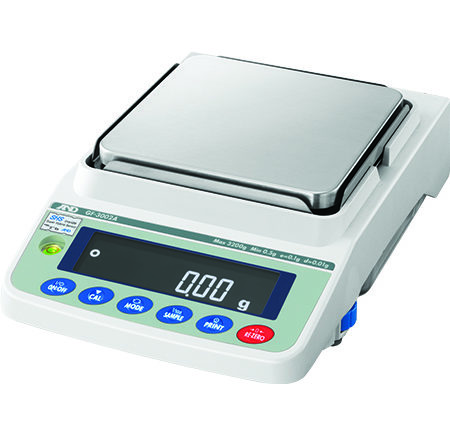
The EJ Series and EK-i Series cover 210 g and 400 g × 0.01 g, with the HT Series for portable field and classroom use. Browse by capacity: up to 300 g, 300 g–1 kg, 1–5 kg or 5 kg and above.
Bench, platform and industrial scales
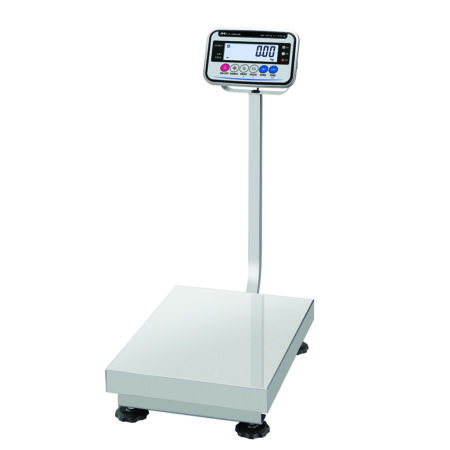
The FG Series bench scales run 30 kg × 1 g up to 150 kg, and the SS high-performance range covers 30 kg × 10 g, 60 kg × 20 g and 150 kg × 50 g. The SC Series suits parts counting and check weighing.
Washdown and waterproof models
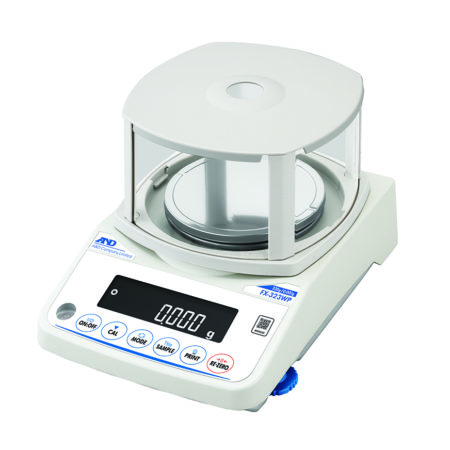
Where the balance gets wet, the FX-WP and FZ-WP precision balances are IP65-rated at 320 g × 0.001 g, and the FG-CWP platform scales are IP67. The SK-WP and HL-WP series cover washdown compact weighing for food and wet-process environments.
Moisture analysers
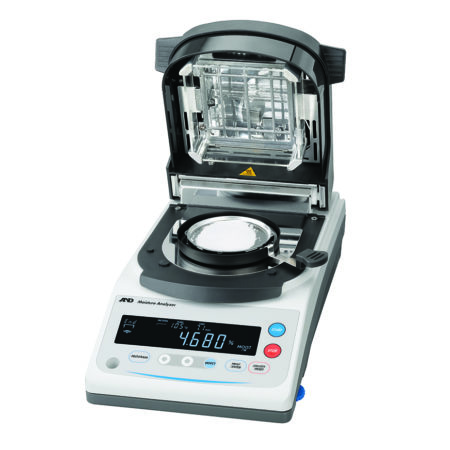
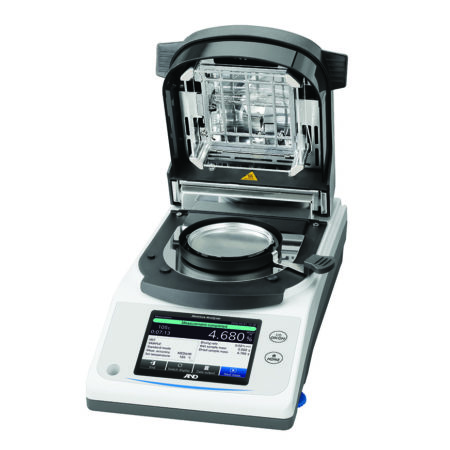
A&D moisture analysers use halogen heating for fast, even drying: the ML-53A at 51 g × 0.005 g, the MF-53A at 0.002 g and the MX-53A at 0.001 g. See the A&D moisture analyser guide for how the series compare.
Trade-approved scales
Fifteen A&D models in stock are trade approved for use in selling by weight, including FG Series bench scales at 30 kg × 0.01 kg, 60 kg × 0.02 kg and 150 kg × 0.05 kg. If you are unsure whether your application needs one, read trade approved balances and verification class.
Frequently asked questions
What is the difference between the A&D GX-A and BH-T series?
Readability and intended use. The GX-A Series is a precision balance range reading to 0.001 g, suited to routine laboratory and production weighing across capacities up to 6,200 g. The BH-T Series is an analytical and semi-micro range reading to 0.1 mg and 0.01 mg, intended for research, pharmacy and quality control where tolerances are tight. Choose GX-A for general laboratory work and BH-T when you need sub-milligram resolution.
Which A&D scales are trade approved?
Fifteen models stocked here are trade approved, concentrated in the FG Series bench scales. Trade approval is required whenever goods are sold by weight, and the approved version of a model usually has coarser readability than the non-trade version. The FG Series reads 30 kg × 0.01 kg trade approved, against 30 kg × 1 g non-trade. Check the model listing, as both versions are stocked.
What does WP mean in an A&D model number?
Waterproof. The FX-WP and FZ-WP precision balances are IP65-rated, and the FG-CWP platform scales are IP67, so they can be hosed down rather than merely wiped. These are the models to specify for food processing, wet laboratories and any environment where spillage is routine.
What readability can A&D balances achieve?
From 0.01 mg at the top of the range to 50 g on a 150 kg platform scale. Analytical and semi-micro models reach 0.01 mg and 0.1 mg, precision balances 0.001 g to 0.1 g, compact balances typically 0.01 g, and industrial scales 1 g to 50 g depending on capacity.
Which A&D moisture analyser should I choose?
All three stocked models share a 51 g capacity and differ in resolution: the ML-53A reads to 0.005 g, the MF-53A to 0.002 g and the MX-53A to 0.001 g. Choose on the precision your method requires. Food and materials testing is usually well served by the ML-53A, while pharmaceutical and research work tends to need the MX-53A.
Can A&D compact balances be used in the field?
Yes. The EJ, EK-i and HT series are built for portability, and many run on battery as well as AC power, which makes them practical for fieldwork, teaching and small production areas. They are also less sensitive to draughts and vibration than analytical balances, so they do not need a controlled environment to give a reliable reading.